








Inside Paraty's Colonial Churches
Four churches, four communities. Here's the story behind each one, and what to notice when you visit.
By Braza Tours Staff | Published on August 25, 2026
Walk through Paraty's Historic Center for more than a few minutes and you'll notice something unusual for such a small town: four historic churches, all within easy walking distance of each other. They weren't built because the town needed more places to pray. During colonial times, Paraty's society was sharply divided, and each church reflected a different part of that society. Understanding the four is one of the best ways to understand the town itself. For the broader story of how Paraty came to look the way it does, see our article Paraty: A Town Built on Gold, Preserved by Time.
Igreja Matriz de Nossa Senhora dos Remédios
The largest and most prominent of Paraty's churches, the Igreja Matriz de Nossa Senhora dos Remédios sits at the heart of the Historic Center and was built for the Portuguese elite and wealthy merchants who profited from the Gold Cycle. Its scale reflects the wealth flowing through the town at the time, tall ceilings, an imposing facade, and a position that made it visible from nearly every angle of the old harbor.
Today, the Matriz remains the ceremonial center of the town. It's the focal point of the Festa de Nossa Senhora dos Remédios, honoring Paraty's patron saint each year, and hosts many of the town's larger religious processions and celebrations.
Our Tip: Look up at the ceiling when you step inside. The scale of the interior is easy to underestimate from the square outside.
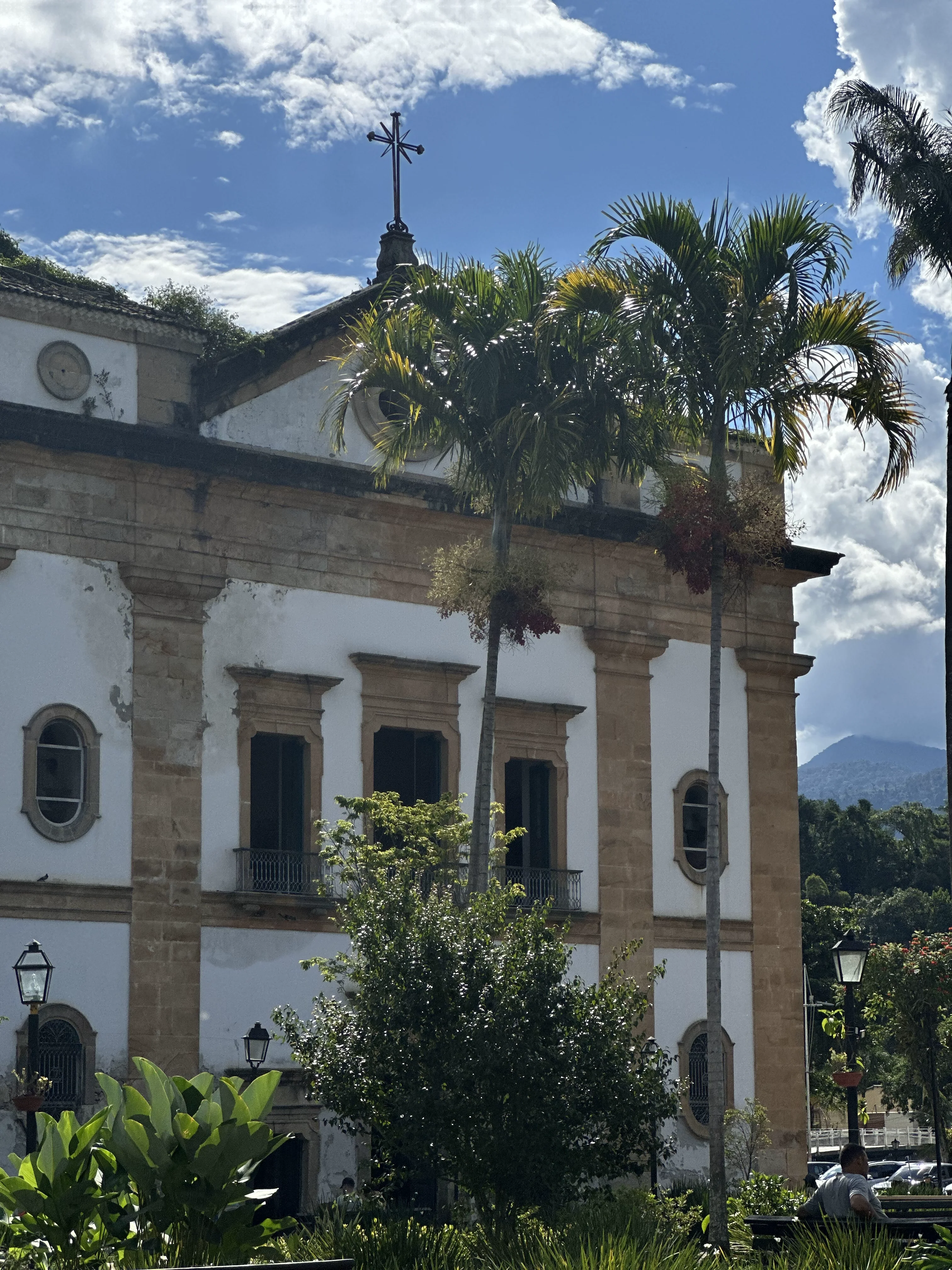
Santa Rita, the oldest surviving church
Santa Rita is Paraty's oldest surviving church, and its story is very different from the Matriz. It was built by the town's free mixed-race community, at a time when access to worship, like nearly everything else in colonial Brazil, was shaped by race and class.
Its simpler facade and smaller scale compared to the Matriz tell part of the story on their own. Today, Santa Rita also houses a small sacred art museum, giving visitors a closer look at religious artifacts and artwork from the period.
Our Tip: If you only have time to step inside one church beyond the Matriz, make it Santa Rita. Its museum adds context you won't get from the outside alone.

Nossa Senhora do Rosário e São Benedito
This church holds one of the most important, and often overlooked, stories in Paraty. It became the place of worship for enslaved and formerly enslaved Africans in the town, at a time when they were barred from worshipping alongside the Portuguese elite in the Matriz.
Standing here today is a reminder that Paraty's wealth during the Gold Cycle was built in large part on forced labor, a history that's easy to overlook amid the town's postcard-perfect colonial streets. It remains an active place of worship and an important site for Paraty's Afro-Brazilian community today.
Nossa Senhora das Dores
The smallest and most intimate of the four, Nossa Senhora das Dores was traditionally frequented by the women of the town's wealthiest families. Its modest scale compared to the Matriz reflects its role as a more private, less ceremonial space.
It's often the church visitors walk past without a second glance, tucked into a quieter corner of the Historic Center, but it rounds out the picture of how deeply colonial Paraty's social structure shaped even its religious spaces.
Our Tip: Visit in the late afternoon, when the light through the surrounding streets is at its best for photos and the crowds have usually thinned out.
Visiting respectfully
All four churches remain active places of worship, not museum pieces, and it's worth keeping that in mind while visiting. Dress modestly when entering, keep your voice down, and avoid photographing services or ceremonies in progress. If you're visiting during a festival such as Festa do Divino or Festa de Nossa Senhora dos Remédios, remember that these traditions remain deeply meaningful to local families.
Seeing all four in one visit
Because all four churches sit within Paraty's compact Historic Center, it's entirely possible to visit them all in a single morning or afternoon. What makes the visit worthwhile isn't just seeing the buildings, it's understanding the stories behind them, which is exactly what a guided walking tour is built to do.
Join our Historic Walking Tour and we'll walk you through all four churches along with the rest of the Historic Center's hidden details, from why the streets flood on purpose to the symbols carved above centuries-old doorways.
Frequently Asked Questions
How many historic churches are in Paraty?
Four: Igreja Matriz de Nossa Senhora dos Remédios, Santa Rita, Nossa Senhora do Rosário e São Benedito, and Nossa Senhora das Dores, each originally built for a different community during the colonial period.
Which is the oldest church in Paraty?
Santa Rita is the oldest surviving church in Paraty's Historic Center and now also houses a small sacred art museum.
Can visitors go inside the churches?
Yes, all four are generally open to visitors, though as active places of worship, it's important to dress modestly and be respectful, especially during services.
Is there an entrance fee?
Access to the churches themselves is typically free, though Santa Rita's sacred art museum may have a small entrance fee.
How long does it take to see all four churches?
Since they're all within Paraty's compact Historic Center, you can comfortably visit all four in a single morning or afternoon, especially as part of a guided walking tour.
Ready for Your Next Adventure?
Don't just dream about it - make it happen. Book your journey to this incredible destination today.